The Independence Gap and "Digital" Speech
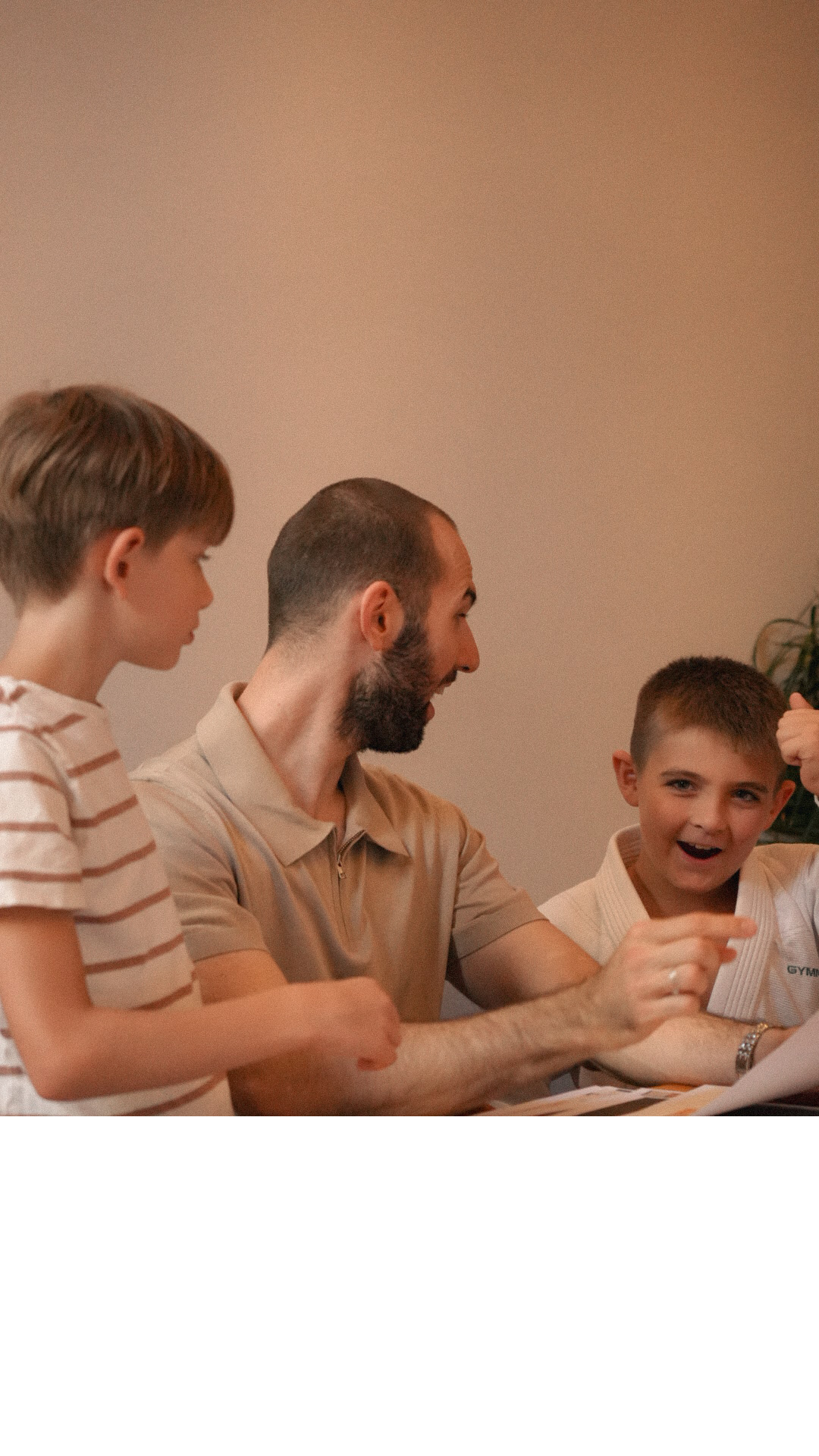
In the past, children developed naturally: they had to find information themselves and resolve playground conflicts without adult intervention. Today, gadgets and overparenting deprive them of this essential practice.
We see this even in communication. Children become so accustomed to chatting that when they try to record a voice message, they often struggle to articulate. Auto-correct creates an illusion of literacy, but in real life, the ability to formulate a coherent thought is being lost.
Our mission as educators is to return independence to children and teach them how to learn in a world where everything is too accessible.
We see this even in communication. Children become so accustomed to chatting that when they try to record a voice message, they often struggle to articulate. Auto-correct creates an illusion of literacy, but in real life, the ability to formulate a coherent thought is being lost.
Our mission as educators is to return independence to children and teach them how to learn in a world where everything is too accessible.
Why Games Beat Lessons
Imagine learning a language. At school, you’re given a worksheet. While you search for the motivation to answer a question, the moment passes.
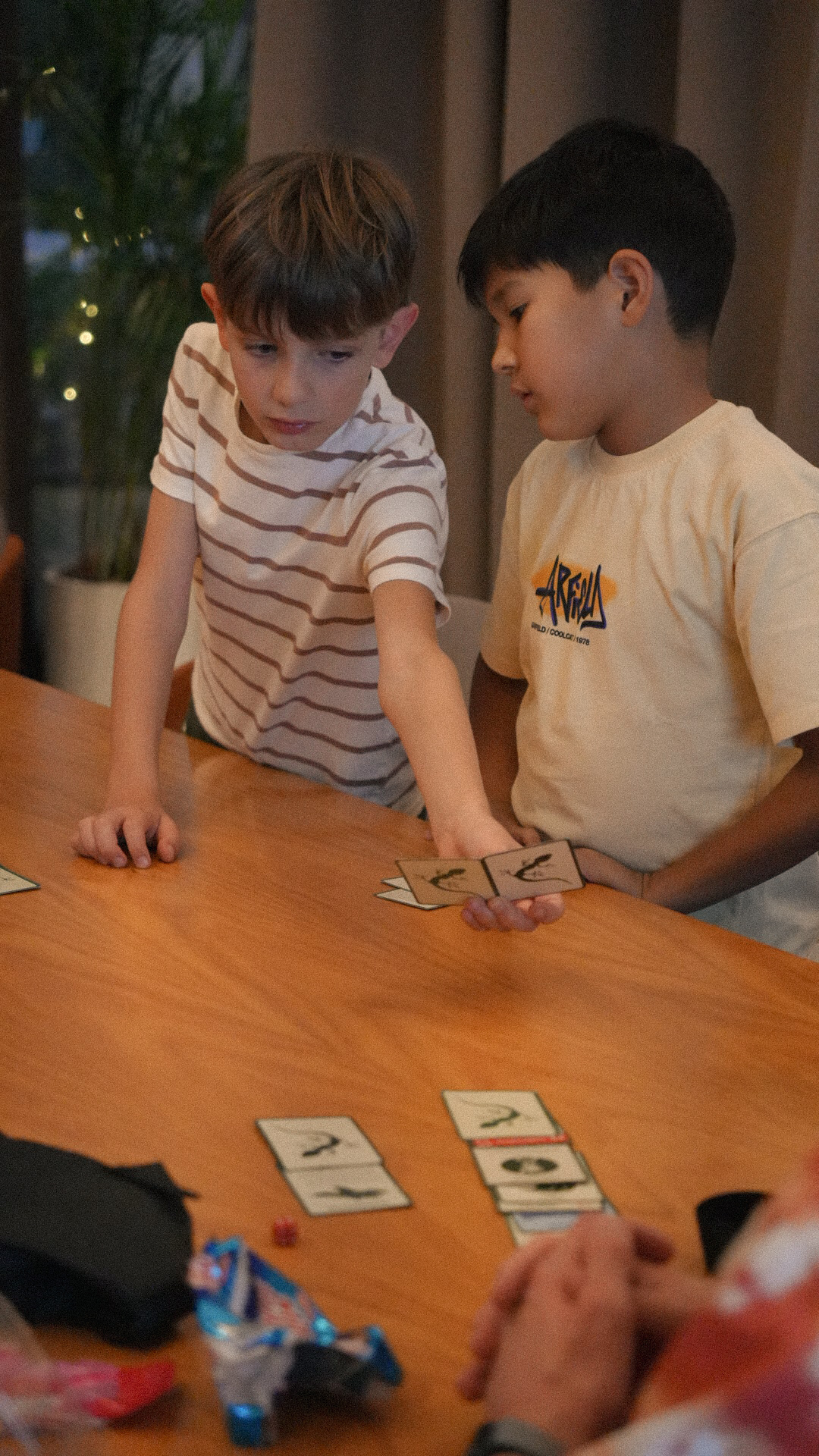
In a game, it’s different. A linguistic situation arises naturally and requires an immediate reaction. In a single game session, a child experiences as many social scenarios as they might encounter in a month of real life. This intensity of experience is unparalleled.
In a game, it’s different. A linguistic situation arises naturally and requires an immediate reaction. In a single game session, a child experiences as many social scenarios as they might encounter in a month of real life. This intensity of experience is unparalleled.
Harnessing "Clip Thinking" and Focus
It’s often said that modern children have short attention spans. We’ve noticed the opposite: their "mobile" attention is a superpower if applied correctly.
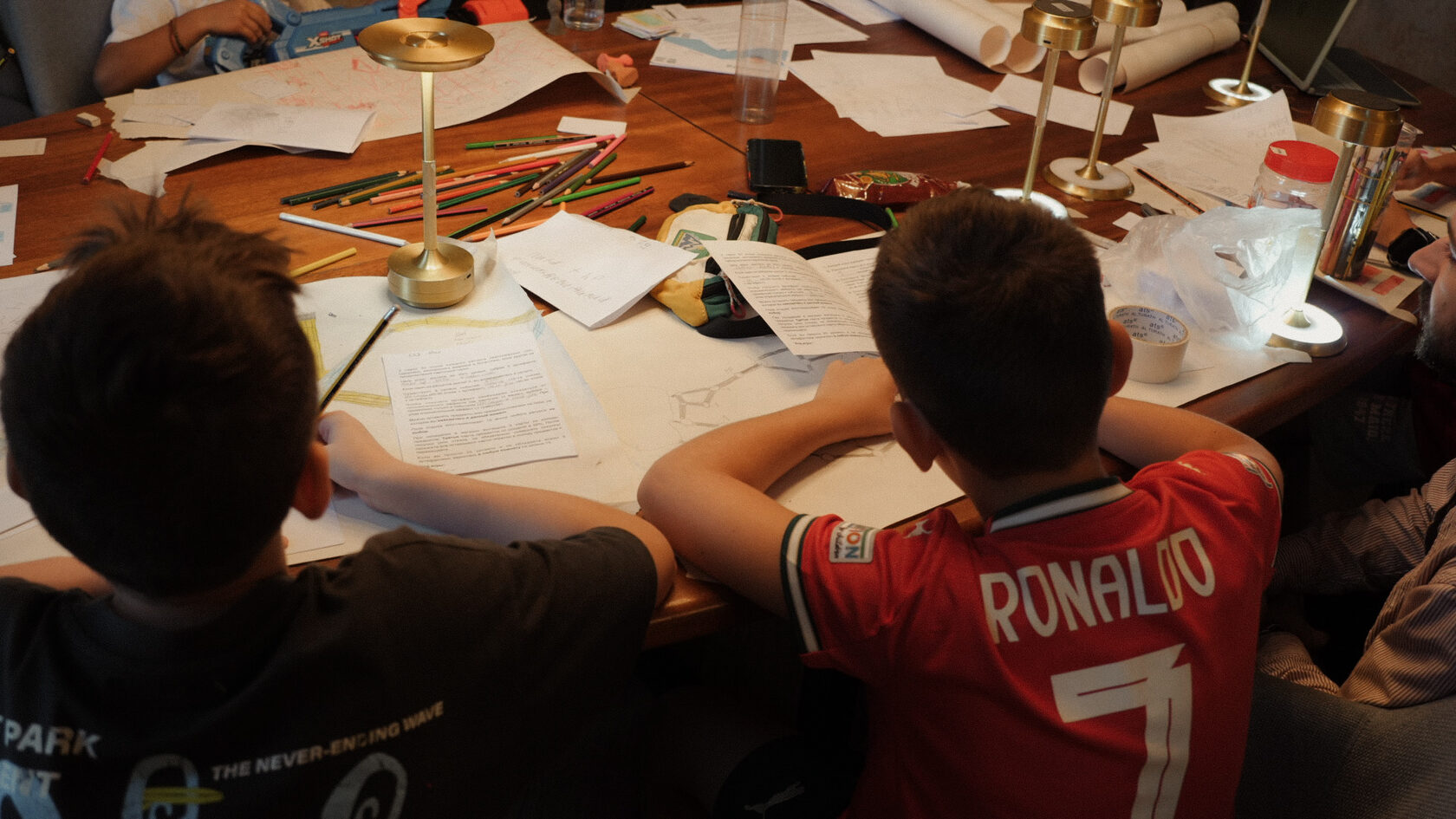
We once challenged a group to design their own game in two hours: mechanics, board design, and balance. Children who usually couldn’t sit still were completely locked in. Their broad focus allowed them to keep dozens of interconnections in mind. Even if they don’t become game designers, the experience of bringing a complex project to completion stays with them forever.
"In a game, an egocentric teenager is forced to shift focus from themselves to others to create a product for an audience. This is the most difficult and vital skill for life."
We once challenged a group to design their own game in two hours: mechanics, board design, and balance. Children who usually couldn’t sit still were completely locked in. Their broad focus allowed them to keep dozens of interconnections in mind. Even if they don’t become game designers, the experience of bringing a complex project to completion stays with them forever.
"In a game, an egocentric teenager is forced to shift focus from themselves to others to create a product for an audience. This is the most difficult and vital skill for life."
How We Choose Games: It’s Not Just Entertainment
Many ask, "How do you know a game is educational?" In reality, 80% of our time is spent on educator training and analysis.
This isn't about universal markers like "looking at the floor." It’s about refined pedagogical intuition. Sometimes it means waiting in silence for a full minute while a child processes a difficult question; other times, it’s recognizing they’ve shut down and shifting tactics.
- Objective: For every game, we pre-define the core theme we are addressing that day.
- Individualized Approach: The educator knows each child's "gaps." We don’t lecture; we nudge the child into situations where they are compelled to practice the necessary skill.
This isn't about universal markers like "looking at the floor." It’s about refined pedagogical intuition. Sometimes it means waiting in silence for a full minute while a child processes a difficult question; other times, it’s recognizing they’ve shut down and shifting tactics.
Our Vision of Success: A Fulfilled Individual
We don’t impose learning. Our shared goal with parents is to raise an adult who knows and understands themselves.
I knew we were on the right track when I started receiving feedback from parents. Their children began passing interviews for prestigious schools more easily, making friends in new environments, and standing up for themselves. When a creative idea brings real-world utility—that is a life’s work.
I knew we were on the right track when I started receiving feedback from parents. Their children began passing interviews for prestigious schools more easily, making friends in new environments, and standing up for themselves. When a creative idea brings real-world utility—that is a life’s work.
Advice for Parents: Focus on the Process, Not Just the Clubs
Until age 18, it’s important to take responsibility for ensuring your child is "going somewhere." But the key isn't to force them; it's to teach reflection: "Why do I want to go here? Why is this boring to me?"
The process of choosing, seeking oneself, and building cause-and-effect relationships is the ultimate skill. Later, a child will apply this to their career, business, and relationships.
The process of choosing, seeking oneself, and building cause-and-effect relationships is the ultimate skill. Later, a child will apply this to their career, business, and relationships.
Watch the full episode on YouTube
